

Ohio Fly Fishing Guide
At a Glance: Ohio offers year-round fly fishing across spring-fed trout streams, Lake Erie steelhead tributaries, and warm-water rivers. A 9-foot, 5-weight fly rod handles most Ohio conditions, and techniques like euro nymphing and dry fly fishing produce well on local waters.
The Mad River, Clear Fork, and Rocky River rank among the state's top destinations, with ODNR stocking thousands of brown and rainbow trout annually.
Ohio has more fly fishing opportunities than most anglers realize. Spring-fed trout streams run through the central part of the state, steelhead pour into Lake Erie tributaries each fall, and smallmouth bass rivers wind through nearly every region.
The Ohio Department of Natural Resources stocks over 80,000 rainbow trout in public lakes and ponds each spring, plus tens of thousands of brown trout in year-round fisheries like the Mad River and Clear Fork (ODNR Division of Wildlife). A handful of streams even hold wild brook trout, a rare find this far into the Midwest.
Gear for Ohio Fly Fishing
Ohio's trout streams, steelhead tributaries, and warm-water rivers each have their own demands, but a versatile setup will cover most situations you'll encounter.
Fly Rods
A 9-foot, 5-weight fly rod is the standard recommendation for trout fishing, and it works well on Ohio waters. This size handles everything from small dry flies to moderate-sized streamers while remaining light enough to feel the fight of an average 10 to 12-inch brown trout.
For anglers targeting steelhead on Lake Erie tributaries, a 7 or 8-weight rod provides the backbone needed to turn larger fish and punch through wind.
Tip: If you're buying your first fly rod, a 9-foot 5-weight with medium-fast action offers the most versatility
Browse fishing rods at Vance Outdoors to find options from brands like St. Croix and Fenwick.
Fly Reels
Your fly reel should match your rod weight and hold enough backing for the fish you're targeting. For trout on Ohio streams, the reel mainly serves as line storage since most fish won't make long runs. A simple click-and-pawl or disc drag reel in the 4 to 6-weight range will do the job.
Steelhead fishing requires more attention to drag systems. These fish make powerful runs, and a reel with a smooth, adjustable disc drag helps protect light tippets while wearing down the fish.
Tip: When pairing a reel to your rod, look for balance. The outfit should feel comfortable in your hand without tipping forward or back.
Check out fishing reels at Vance Outdoors for options that fit your setup.
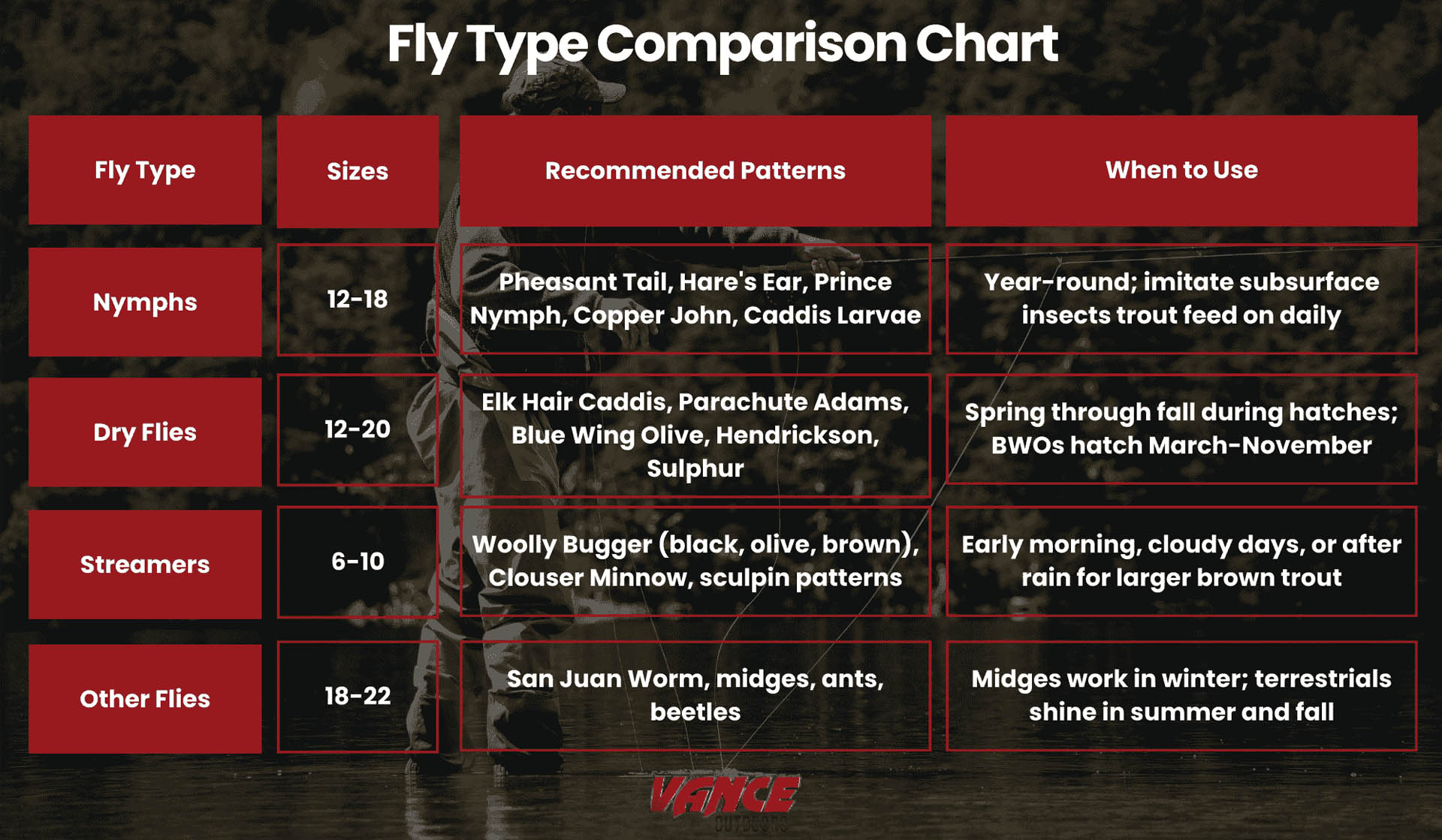
Fly Box Essentials
Ohio's trout streams have predictable hatches that make fly selection straightforward. Stock your fly box with patterns that match local insects, and you'll be prepared for most situations.
Waders and Accessories
Waders extend your fishing season and let you reach water that bank anglers can't access. Breathable chest waders work well in Ohio's variable climate, keeping you comfortable in spring and fall while remaining manageable during warmer months.
Other useful accessories include:
- Polarized sunglasses: Cut glare and help you spot fish and structure
- Nippers and forceps: For cutting line and removing hooks
- Strike indicators: Useful for nymph fishing
- Leaders and tippet: Carry 4X, 5X, and 6X tippet to match conditions
- Landing net: Makes releasing fish easier and safer
Visit Vance Outdoors for a full selection of fishing gear and accessories.
Fly Fishing Techniques for Ohio Waters
Ohio's trout streams offer opportunities to fish nymphs, dry flies, and streamers depending on conditions, season, and what the fish are eating.
Nymphing
Trout spend most of their time feeding below the surface, which makes nymphing the most productive technique on Ohio waters.
Indicator Nymphing
This traditional method uses a strike indicator (a small float) attached to your leader to detect strikes and suspend your flies at a set depth. Cast upstream, let the nymphs drift naturally with the current, and watch for any pause or twitch in the indicator. Set the hook quickly when you see movement.
Adjust the distance between your indicator and flies based on water depth. A good starting point is one and a half times the depth of the water you're fishing.
Euro Nymphing
Euro nymphing has gained popularity for good reason. This tight-line technique keeps you in direct contact with your flies, making it easier to detect subtle strikes. Instead of an indicator, you use a colored section of monofilament called a "sighter" to track your drift.
The method uses weighted flies (typically with tungsten beads) and a long leader with minimal fly line beyond the rod tip. Cast upstream, lead the flies downstream with your rod tip held high, and stay alert for any hesitation in the sighter.
You can start euro nymphing with a standard 9-foot 5-weight rod, though dedicated euro rods (10-11 feet, 2-4 weight) offer better reach and sensitivity.
Dry Fly Fishing
When trout are rising to surface insects, dry fly fishing delivers some of the most exciting action in the sport. Ohio streams see reliable hatches of mayflies, caddisflies, and midges that bring fish to the top.
The key to dry fly success is achieving a drag-free drift. Your fly should float naturally with the current, as if it's not attached to anything. Drag occurs when currents pull on your line and leader, causing the fly to skate or move unnaturally.
Tips for better dry fly presentations:
- Position yourself downstream and to the side of rising fish
- Cast upstream so the fly reaches the fish before the leader
- Mend your line by flipping it upstream to reduce drag
- Use longer, finer tippets (5X or 6X) for wary fish in clear water
- Keep slack in your leader to extend the natural drift
Watch the water for rising fish before you start casting. Note where trout are feeding, then work your way upstream.
Streamer Fishing
Streamers imitate baitfish, sculpins, crayfish, and other larger prey. This technique targets aggressive fish and often produces the biggest trout of the day.
Unlike nymphs and dry flies, streamers are actively retrieved rather than dead-drifted. Cast across or slightly downstream, let the fly swing in the current, and strip it back with short, erratic pulls. Vary your retrieve speed and pattern until you find what triggers strikes.
Streamer fishing shines in specific conditions:
- Early morning and late evening when big fish move to feed
- After rain when water is slightly off-color
- During winter months when trout need more calories
- In deeper pools and runs where larger fish hold
Matching Conditions to Technique
Knowing when to switch techniques improves your catch rate. Here's a general guide:
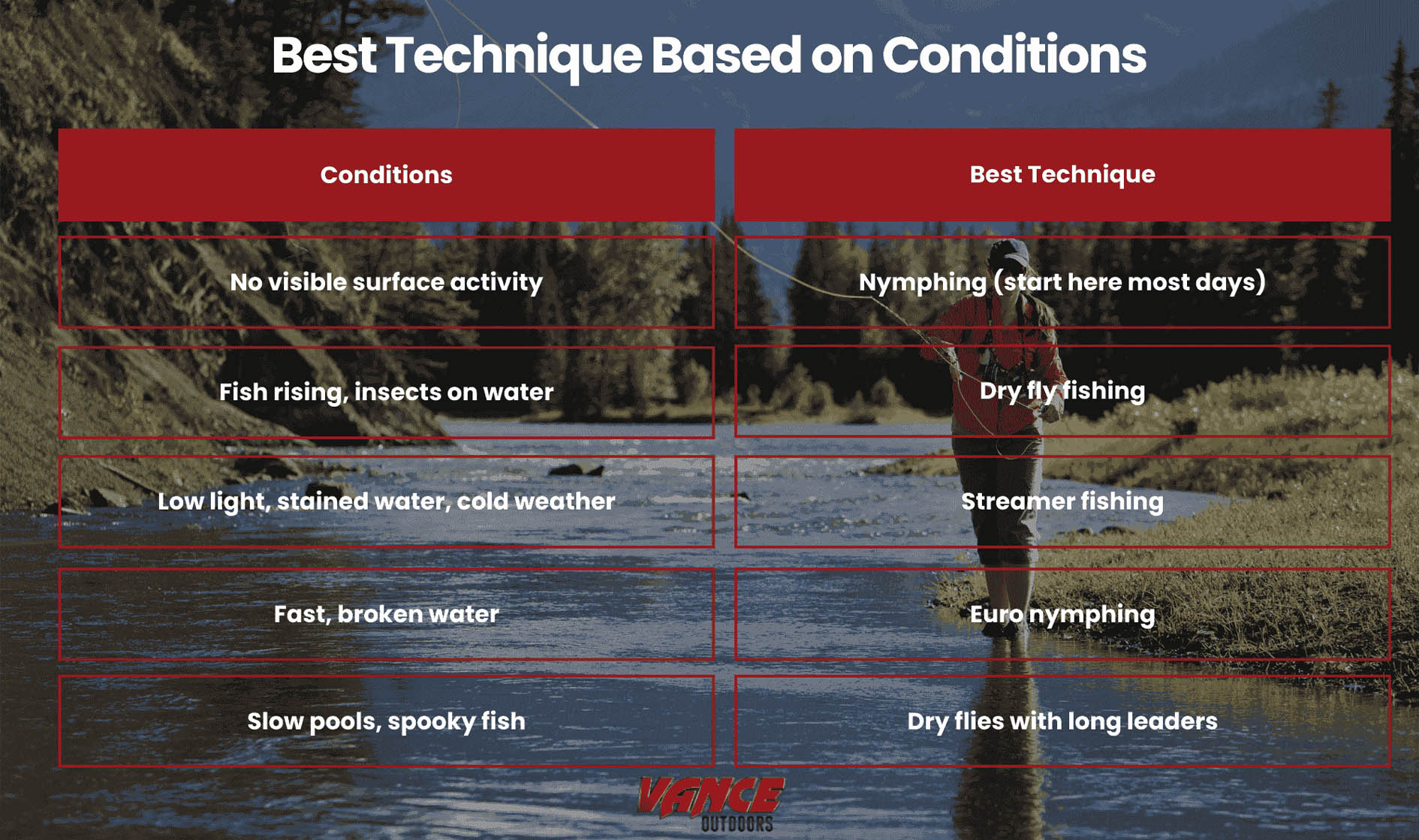
Pay attention to what the water tells you. If nymphing isn't producing after 20-30 minutes, try a different depth, switch flies, or move to new water.
Best Fly Fishing Spots in Ohio
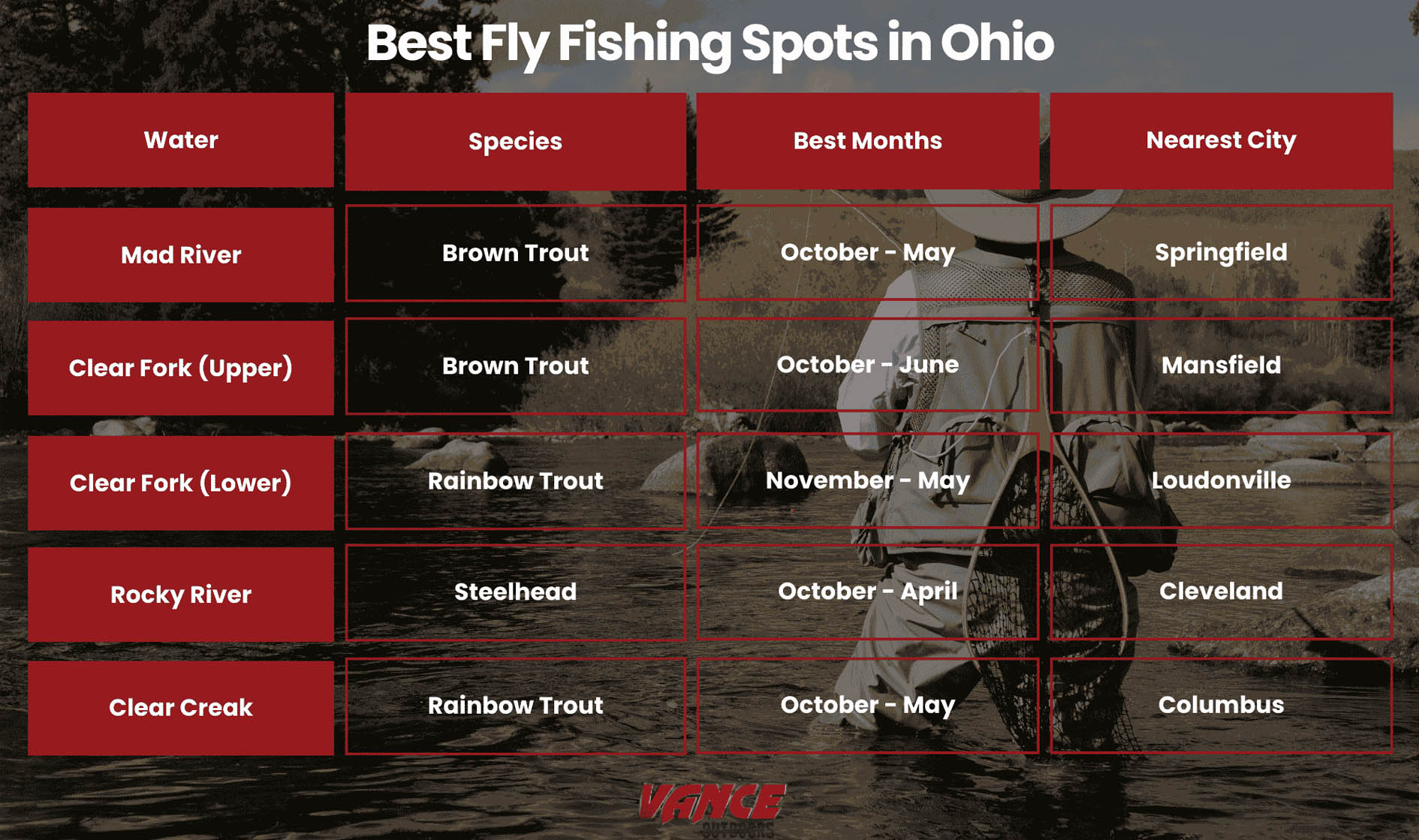
Ohio has a handful of quality fly fishing destinations spread across the state.
Mad River
Location: West-central Ohio (Logan, Champaign, Clark counties)
Species: Brown trout, brook trout (limited)
Best Season: October through May
The Mad River is Ohio's oldest and largest cold-water fishery. Spring-fed tributaries keep water temperatures cool enough to support trout year-round, making it the state's most reliable destination for fly fishing.
ODNR stocks approximately 11,500 brown trout annually, and some fish hold over to reach 12 inches or larger.
Access Points:
- Pimtown Road (pull-off parking, wade upstream)
- State Route 36 bridge
- State Route 29 near Urbana
- Farm Market access
What to Expect: The river averages 30-40 feet wide with a mix of riffles, runs, and pools. Clear water and wary fish mean stealth matters. Fish upstream and target undercut banks and overhanging cover where browns like to hold.
Clear Fork of the Mohican River
Location: North-central Ohio (Richland, Ashland counties)
Species: Brown trout (upper), rainbow trout (lower)
Best Season: October through June
The Clear Fork splits into two distinct sections. The Upper Clear Fork above Pleasant Hill Reservoir holds stocked brown trout that can reach 20 inches or more. The Lower Clear Fork through Mohican State Park receives rainbow trout stockings and offers easier public access.
Access Points:
- Mohican State Park covered bridge (best public access)
- Butler and Bellville bridge crossings (upper section)
- Pleasant Hill Dam tailwater
What to Expect: The upper section flows mostly through private land, so ask permission before fishing posted areas. The state park section is scenic and accessible, with good mayfly hatches from May through July.
Steelhead Alley (Lake Erie Tributaries)
Location: Northeast Ohio
Primary Rivers: Rocky River, Chagrin River, Grand River, Vermilion River, Conneaut Creek
Species: Steelhead trout
Best Season: Late October through April
Ohio stocks roughly 400,000 steelhead smolts into Lake Erie tributaries each year. The Rocky River offers the most accessible fishing, with Cleveland Metroparks providing public access along most of its length.
Access Points (Rocky River):
- Valley Parkway pulloffs throughout the Metroparks
- Puritas Road bridge area
- Cedar Point Road access
What to Expect: Steelhead Alley rivers rise and fall quickly after rain. Check USGS stream gauges before driving. The Rocky fishes best between 150-250 cfs as water clears after high flows. A 7 or 8-weight rod handles these powerful fish better than trout gear.
Clear Creek
Location: Southeast Ohio (Fairfield, Hocking counties)
Species: Rainbow trout
Best Season: Fall through late spring
Clear Creek is the only trout stream in southeast Ohio and sits about 40 minutes from Columbus. ODNR stocks rainbow trout in the fall, and many hold over through winter and into spring.
Access Points:
- Clear Creek Metro Park (road access throughout the park)
What to Expect: This is a put-and-take fishery, so recently stocked fish aren't as selective as wild trout. Good for beginners or anglers looking for a quick trip from Columbus. The scenic gorge setting and easy access make it worth a visit.
Planning Your First Fly Fishing Trip
A successful fly fishing trip takes some preparation, but it doesn't have to be complicated. Here's what you need to know before heading to Ohio waters for the first time.
Licensing Requirements
Anyone 16 or older needs a valid Ohio fishing license to fish public waters. Resident licenses cost $25 and are valid for one year from the date of purchase. You can buy your license online at wildohio.gov, through the HuntFish OH mobile app, or at participating retailers across the state.
Tip: Licenses can be purchased up to 30 days before your current one expires, so you can renew without a gap in coverage.
Hiring a Guide Service
If you're new to fly fishing or unfamiliar with Ohio waters, spending time with an experienced guide can reduce the learning curve. A good guide knows where fish hold in different conditions and can help you dial in the necessary techniques. Most outfitters provide fly rods, fly reels, and flies if you don't have your own gear yet.
Best Times to Fish
Trout Fishing (Mad River, Clear Fork, Clear Creek)
The prime window runs from October through May. Spring-fed streams like the Mad River maintain stable water temperature year-round, keeping fish active when other waters warm up in summer.
Avoid midsummer fishing on most trout streams. Warmer water stresses fish and reduces their survival after release. If you do fish during the warmer months, stick to early morning hours before temperatures climb.
Steelhead (Lake Erie Tributaries)
Steelhead season runs from late October through April. Fish start entering the tributaries in fall, with action continuing through winter and into early spring. Winter months can produce excellent fishing if you're willing to brave the cold. Dress in layers and watch for ice on wading surfaces.
Tip: Check USGS stream gauges before driving to steelhead water. These rivers rise and fall quickly after rain, and fishing is best between 150 and 250 cfs as the water clears.
What to Bring
Beyond your fly rod, fly reel, and fly box, pack these items for a successful outing:
- Valid Ohio fishing license (keep it on your person)
- Polarized sunglasses for spotting fish and structure
- Rain jacket, even if the forecast looks clear
- Water and snacks for all-day trips
- A small towel for drying hands between casts
- Tippet material in multiple sizes (4X, 5X, 6X)
- Nippers and forceps
Off-Season Practice
The off-season gives you time to prepare for the next year of fishing. Many fly fishermen use this time for tying flies, which saves money and lets you customize patterns for local waters. Start with simple patterns like Woolly Buggers and Pheasant Tails before moving to more complex dry flies.
Practice casting in your backyard or at a local park. Even 15 minutes of casting a few times a week will improve your accuracy and distance. Focus on tight loops and smooth acceleration rather than power.
Start Your Fly Fishing Journey
Ohio's fly fishing opportunities are closer than most anglers think. From the brown trout of the Mad River to chrome steelhead in Rocky River, the state offers quality water within a short drive of most Ohio cities.
Start with the basics: a 9-foot 5-weight fly rod handles most situations, a handful of proven fly patterns will catch fish, and techniques like nymphing produce results year-round. As you spend more time on the water, you'll develop preferences for specific rivers, hatches, and methods that work best for you.
The best way to improve is simply to go fishing. Pick a stream from this guide, check current conditions, and head out for a few hours. Every trip teaches you something new about reading water, presenting flies, and understanding fish behavior.
Browse fishing rods, fishing reels, and fishing equipment at Vance Outdoors to gear up for your first Ohio fly fishing trip.