At a Glance
Shotgun shells come in three main types: birdshot, buckshot, and slugs. Each type serves specific purposes, including game hunting, self defense, and sport shooting.
The modern shotgun shell has come a long way since its paper-cased ancestors of the 1800s. Today's shells feature weather-resistant materials, precise manufacturing, and specialized loads for everything from clay shooting to tactical applications. For both newcomers and experienced shooters, the type of shotgun shell you're using impacts your shooting performance.
Each type of shotgun ammo has evolved to meet specific shooting needs, with birdshot, buckshot, and slugs being the three most common options. By understanding the different types, you'll be better equipped to choose the right ammunition for your specific needs.
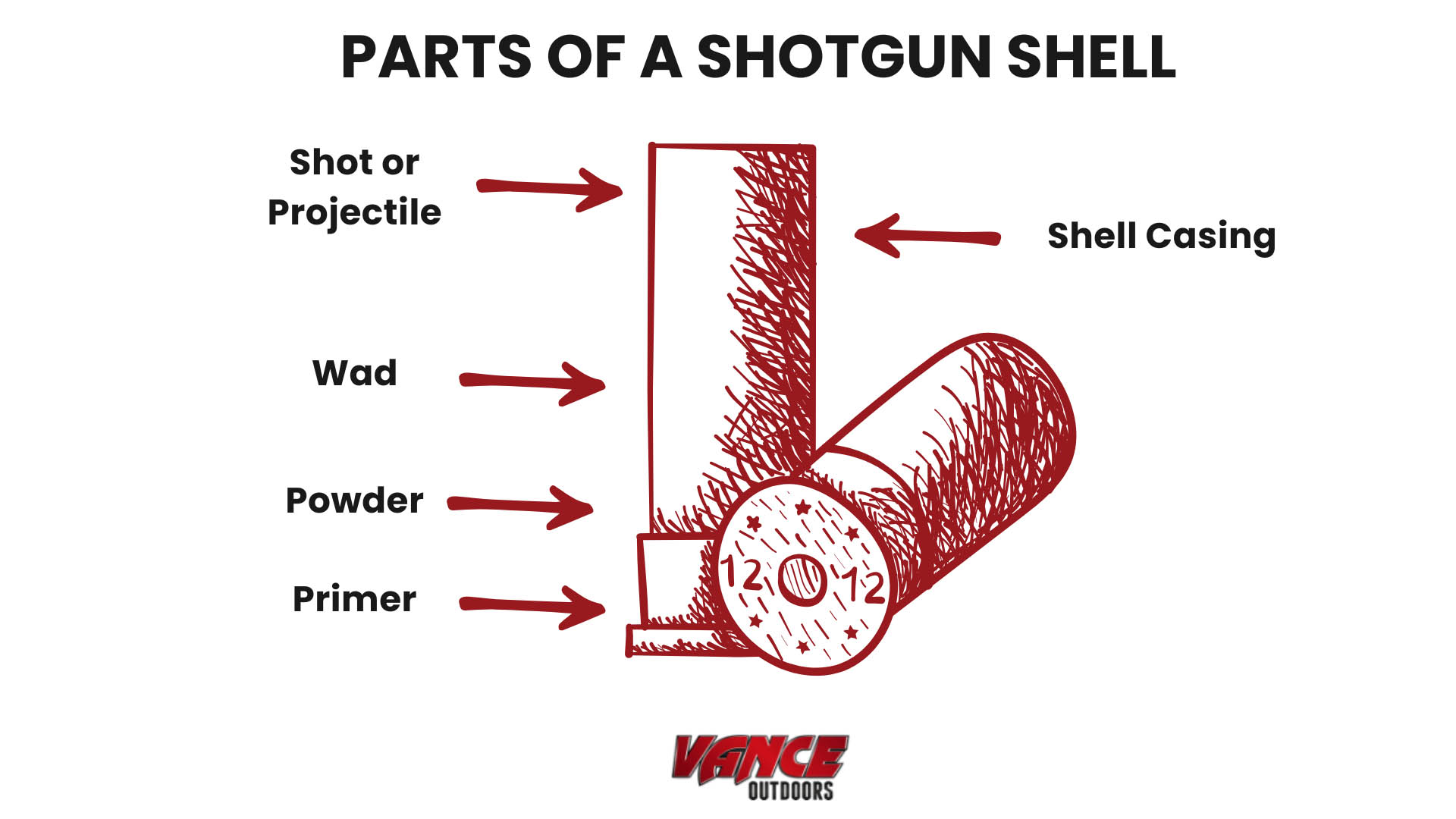
Understanding Shotgun Shell Construction
Basic Components
Shotgun shells consist of five main parts: the shell casing, primer, powder charge, wad, and shot or projectile.
- Shell Casing: Typically made of plastic with a brass base, the casing houses all other components and provides structural integrity.
- Primer: Located in the brass base, the primer ignites when struck by the firing pin.
- Powder: After the primer is ignited, the powder charge creates the energy needed to propel the shot.
- Wad: This separates the powder from the shot and helps create a gas seal.
- Shot or Projectile: The shot itself consists of multiple pellets or a single slug.
Gauge Sizes
Gauge sizes reflect the diameter of the barrel and shell, though their measurements stem from an old system based on lead balls. The most common gauge sizes are 12, 20, and 28.
-
12-Gauge
: Widely considered to be the standard for most shooting applications, this equals the diameter of a pure lead ball weighing 1/12 of a pound. This allows the 12-gauge to accommodate a wide range of loads and shot sizes.
-
20-Gauge
: Slightly smaller in diameter than the 12-gauge, the 20-gauge is popular for hunting small game and shooters seeking lighter recoil without sacrificing performance.
-
28-Gauge
: With a smaller diameter than both the 12- and 20-gauge, this less common option offers light recoil and precise control.
Shell Length
The lengths of shotgun shells vary within each gauge size. Longer shells accommodate more shot or powder, but shooters must ensure their shotgun is rated for these larger sizes. Modern shotgun shells display important information on their sides, including:
- Gauge size
- Shell length
- Shot size number
- Shot weight
- Velocity rating
- Manufacturer's markings
Always match these specifications to your firearm's requirements for safe operation. Mixing different gauges or using shells longer than your shotgun's chamber can create dangerous situations.
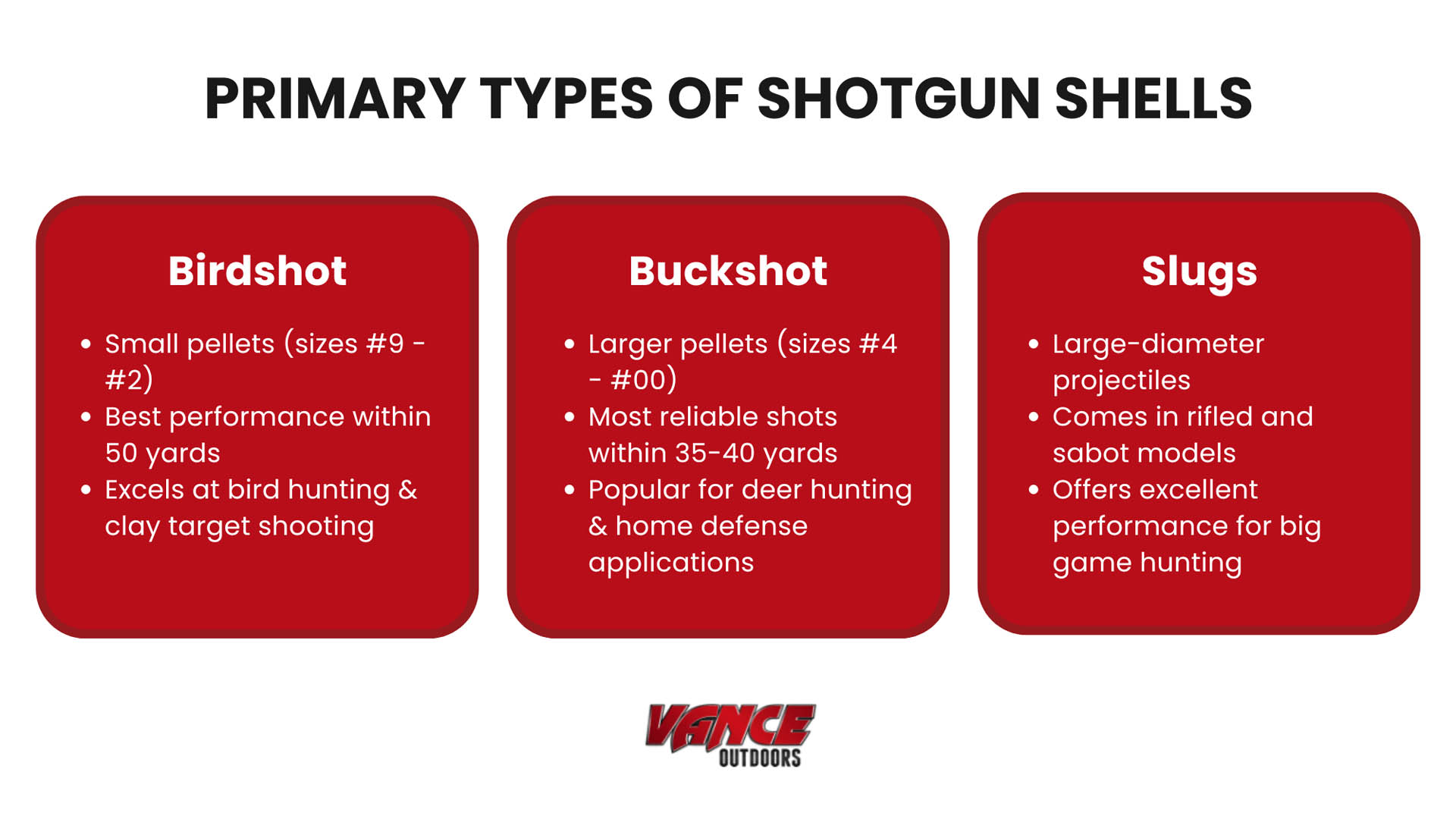
Common Shotgun Ammunition Types and Their Uses
Shotgun shells come in three main varieties: birdshot, buckshot, and slugs. Each type serves distinct purposes and performs best at different ranges, making them valuable tools for specific shooting applications.
Birdshot
Birdshot shells contain numerous small pellets ranging from #9 (tiny) to #2 (larger) shot sizes. These shells excel at bird hunting and clay target shooting, where spreading patterns of small shot increase hit probability on fast-moving targets. The 2 3/4-inch shells are standard for most applications, while 3-inch and 3 1/2-inch options provide increased payload for waterfowl hunting.
Birdshot performs best within 50 yards, with effectiveness dropping significantly beyond that range.
Buckshot
Buckshot shells pack larger pellets, typically ranging from #4 to #00 ("double-aught"). These shells are popular for deer hunting and home defense applications. The most common size, #00, contains nine .33-caliber pellets in a standard 2 3/4-inch shell.
Buckshot maintains practical accuracy to about 35-40 yards, making it effective for woodland hunting scenarios. Its pattern spread becomes too wide for reliable shot placement beyond these distances.
Slugs
Shotgun slugs are single, large-diameter projectiles designed for accuracy and power. Available in weights from 7/8 oz to 1 1/8 oz, slugs offer excellent performance for larger game hunting.
- Rifled Slugs: These feature spiral grooves that work with smooth-bore barrels
- Sabot Slugs: These use a plastic sleeve to engage rifled barrels for improved accuracy.
When paired with appropriate barrels and sights, slugs can maintain practical accuracy out to 75-100 yards. Their substantial weight delivers significant energy on target, making them suitable for greater distances and large game where precision shot placement matters.
Remember to pattern-test shells through your gun and shotgun choke at realistic distances to pick the load that gives the best, most reliable pattern.
Specialty and Performance Shells
Game-Specific Ammo
Some manufacturers tailor birdshot loads, buckshot loads, and slugs to create specialized shells by adjusting shot material, pellet size, velocity, wad design, and payload. This adjusts pattern density, downrange energy, and penetration to target specific game and conditions.
Waterfowl Shells
Due to environmental regulations, steel shots have become the standard for waterfowl hunting. These non-toxic shells prevent lead contamination in wetland environments while maintaining effective hunting performance. These specialized birdshot shells travel at higher velocities than lead to compensate for its lighter weight, though hunters should select larger shot sizes compared to lead equivalents for similar results.
Turkey Shells
Turkeys often require shells that are denser and harder than steel shots. Birdshot shells made from lead or Tungsten Super-Shot (TSS) allow smaller pellets to achieve high-energy responses. TSS in particular delivers superior downrange energy and lethal patterns, allowing effective shots at longer ranges with tighter chokes.
Competitive Shooting Options
Competition shooters rely on precisely manufactured shells tailored to their specific shooting discipline. These specialized shells focus on consistency and uniform patterns over raw power.
- Trap Loads: This type of birdshot ammo generally use smaller shot sizes like #7.5 or #8 with moderate velocities for breaking targets at predictable ranges.
- Sporting Clays: This birdshot ammunition may vary in shot size and velocity depending on the target presentation, with many shooters selecting #7.5 shot for optimal breaking power and pattern density.
Personal Protection & Home Defense
Defense loads typically feature-
- Buckshot Configurations: These are optimized for better accuracy and close-range effectiveness.
- Shot Pellets: These are carefully arranged pellets that create consistent patterns at defensive distances.
- Reduced Recoil: These formulas allow for quick follow-up shots while maintaining stopping power.
- Specialized Wads: These help control pattern spread at indoor distances.
Less-Lethal Rounds
Practice rounds use lightweight materials or reduced powder charges to decrease recoil while maintaining similar flight characteristics to duty ammunition. Less-lethal defensive loads contain rubber balls, bean bags, or other non-penetrating projectiles designed to stop threats without causing fatal injuries. These options serve specialized roles in training and defensive scenarios and require specific training and understanding of their limitations and appropriate use cases.
Find the Right Shotgun Cartridges & More at Vance Outdoors
Choosing the right shotgun shell comes down to matching the ammunition to your specific purpose. Understanding shell types ensures you're properly equipped for the task, whether it’s hunting, practicing at the range, or selecting defensive rounds for home protection. Always store ammunition in a cool, dry place away from heat sources and moisture and inspect shells for signs of damage before use.
For the best results, purchase ammunition from trusted retailers who maintain proper storage conditions and stock fresh inventory. Vance Outdoors carries a complete selection of shotgun shells from leading manufacturers, backed by our expert staff who can answer your questions and help you select the perfect ammunition for your personal preference. View our collection of shotgun ammunition or visit any of our five Ohio locations to browse our extensive inventory of firearms, ammunition, accessories, and more, with options available for every shooting application.