At a Glance: In Ohio, owning a suppressor requires understanding both state and federal laws. Suppressors are legal but come with specific requirements, including registration, background checks, and tax stamps.
Suppressors are increasingly popular among hunters, recreational shooters, and law enforcement professionals. They help reduce noise and improve shooting accuracy by minimizing recoil. However, owning and using a suppressor comes with specific legal responsibilities, especially in Ohio.
Understanding Ohio's suppressor laws alongside federal regulations is essential for gun owners who wish to stay compliant and avoid legal issues. In this blog, we'll guide you through the requirements, the purchase process, and key considerations for responsible suppressor ownership in Ohio.
What is a Suppressor?
A suppressor, often referred to as a firearm muffler, is a device attached to the muzzle of a firearm to reduce the noise produced when the firearm is discharged. Suppressors are designed to minimize the sound by reducing the speed of expanding gases, which lessens the sonic boom created when a bullet exits the barrel. While they're commonly associated with stealth or crime in movies, suppressors are used by hunters, recreational shooters, and law enforcement for more practical reasons, such as reducing noise pollution and improving shooting accuracy.
How Does a Suppressor Work?
Suppressors function by trapping and slowing the expanding gases produced when a bullet is fired. This reduction in gas pressure lowers the noise created as the bullet exits the firearm. The suppressor's inner design, usually a series of baffles or expansion chambers, diverts these gases in a controlled way to decrease the sound. Suppressors are most effective on subsonic ammunition, which travels slower than the speed of sound, as supersonic bullets can still create a sonic boom upon firing.
Benefits of Using a Suppressor
- Noise Reduction: Suppressors reduce noise levels significantly, which is important for shooting at public ranges, during hunting, or when engaging in tactical operations where noise discipline is essential.
- Improved Accuracy: By reducing recoil and muzzle rise, suppressors can help maintain better accuracy, especially for follow-up shots.
- Hearing Protection: Using a suppressor can help protect a shooter's hearing over time, as repeated exposure to loud gunfire can lead to hearing damage.
- Reduced Disruption: Suppressors make shooting less disruptive to the environment, which is particularly valuable in areas where noise ordinances or wildlife protection are a concern.
Ohio Suppressor Laws vs. Federal Law
Suppressors are legal in Ohio, but gun owners must comply with both state and federal regulations. While Ohio law follows the federal National Firearms Act (NFA) guidelines, there are state-specific considerations to keep in mind.
Federal Law and Suppressors
Under federal law, suppressors are classified as NFA items. To legally purchase one, you must:
- Submit an ATF Form 4 (Application for Tax Paid Transfer and Registration of Firearm).
- Pass a background check conducted by the Bureau of Alcohol, Tobacco, Firearms and Explosives (ATF).
- Pay a $200 tax stamp (As of Jan 1, 2026, $200 is no longer required for a tax stamp).
- Complete fingerprinting and submit photos.
- Wait for approval, which can take several months.
Once approved, the suppressor is registered with the ATF, and the buyer is legally allowed to own it.
Ohio Law on Suppressors
Ohio follows federal NFA guidelines, but there are a few points specific to the state:
- Suppressors are legal to own for hunting, recreational shooting, and self-defense.
- Ohio residents must adhere to the same background checks and registration requirements as federal law mandates.
- Ohio law prohibits suppressor use in illegal activities, like committing crimes or hunting in restricted areas.
Ohio Revised Code (ORC) doesn't add additional suppressor requirements, but it's always a good idea to stay up-to-date on any changes in state law.
Key Differences Between Ohio and Federal Law
The key differences between Ohio and federal laws are mainly related to restrictions on suppressor use in specific situations, such as hunting. Ohio doesn't have additional suppressor laws beyond the federal framework, but it's important for firearm owners to be aware of both state and federal requirements.
How to Legally Purchase a Suppressor in Ohio
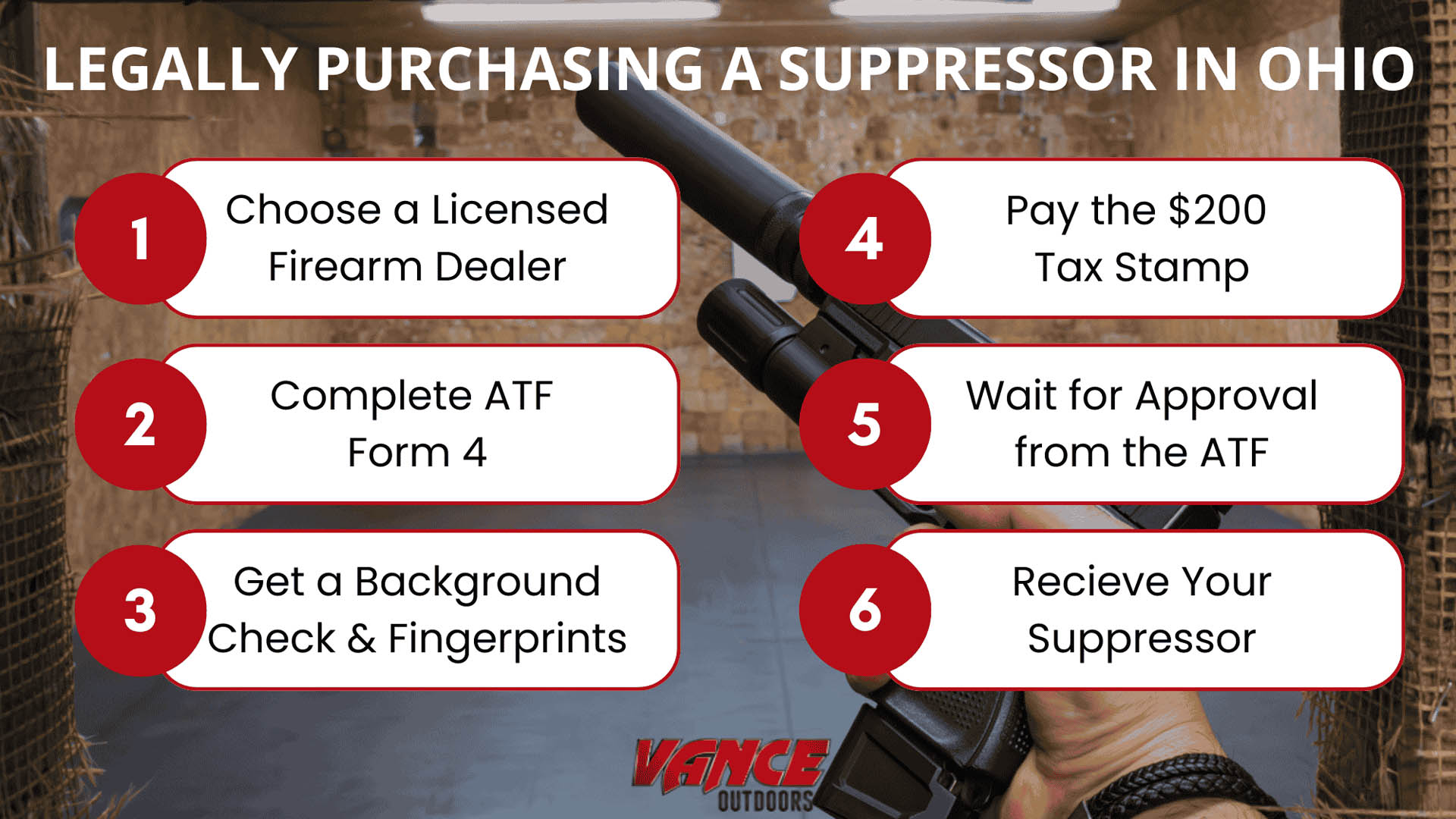
Purchasing a suppressor in Ohio involves following both federal and state guidelines. Here's a step-by-step process to ensure you're compliant with all legal requirements.
Step 1: Choose a Licensed Firearm Dealer
To purchase a suppressor, you must go through a licensed firearm dealer who is authorized to sell NFA items. These dealers will assist with the paperwork and help you navigate the legal requirements. It's important to choose a reputable dealer to ensure a smooth transaction.
Step 2: Complete ATF Form 4
Once you've chosen your suppressor, you'll need to complete ATF Form 4, which is the application for tax-paid transfer and registration of the suppressor. This form requires you to provide basic personal information, details about the suppressor, and your fingerprint card for a background check.
Step 3: Background Check and Fingerprints
A background check is required for all suppressor purchases, just like any other NFA item. You'll submit your fingerprints and passport-style photos along with the Form 4. The ATF will conduct the check to ensure you're legally eligible to own the suppressor.
Step 4: Pay the Tax Stamp
A $200 tax stamp (as of Jan 1, 2026, there is no longer a $200 charge for the tax stamp) is required for each suppressor you purchase. The ATF will issue a stamp once your application is approved. This fee is part of the NFA compliance process and helps regulate suppressor ownership in the United States.
Step 5: Wait for Approval
The approval process for a suppressor purchase can take several months, as the ATF must review your application and conduct a thorough background check. Once approved, you'll receive your tax stamp, and the suppressor will be legally registered to you.
Step 6: Take Possession of Your Suppressor
After receiving approval from the ATF, you can take possession of your suppressor from the licensed dealer. Keep a copy of your approval, as it serves as proof of legal ownership.
Using a Gun Trust for Suppressor Purchases
Many gun owners choose to use a gun trust to purchase suppressors. A gun trust is a legal entity that allows multiple individuals to possess and use the suppressor. This can simplify the process, especially for those who want family members or business partners to legally possess the suppressor.
Common Mistakes and Legal Pitfalls to Avoid
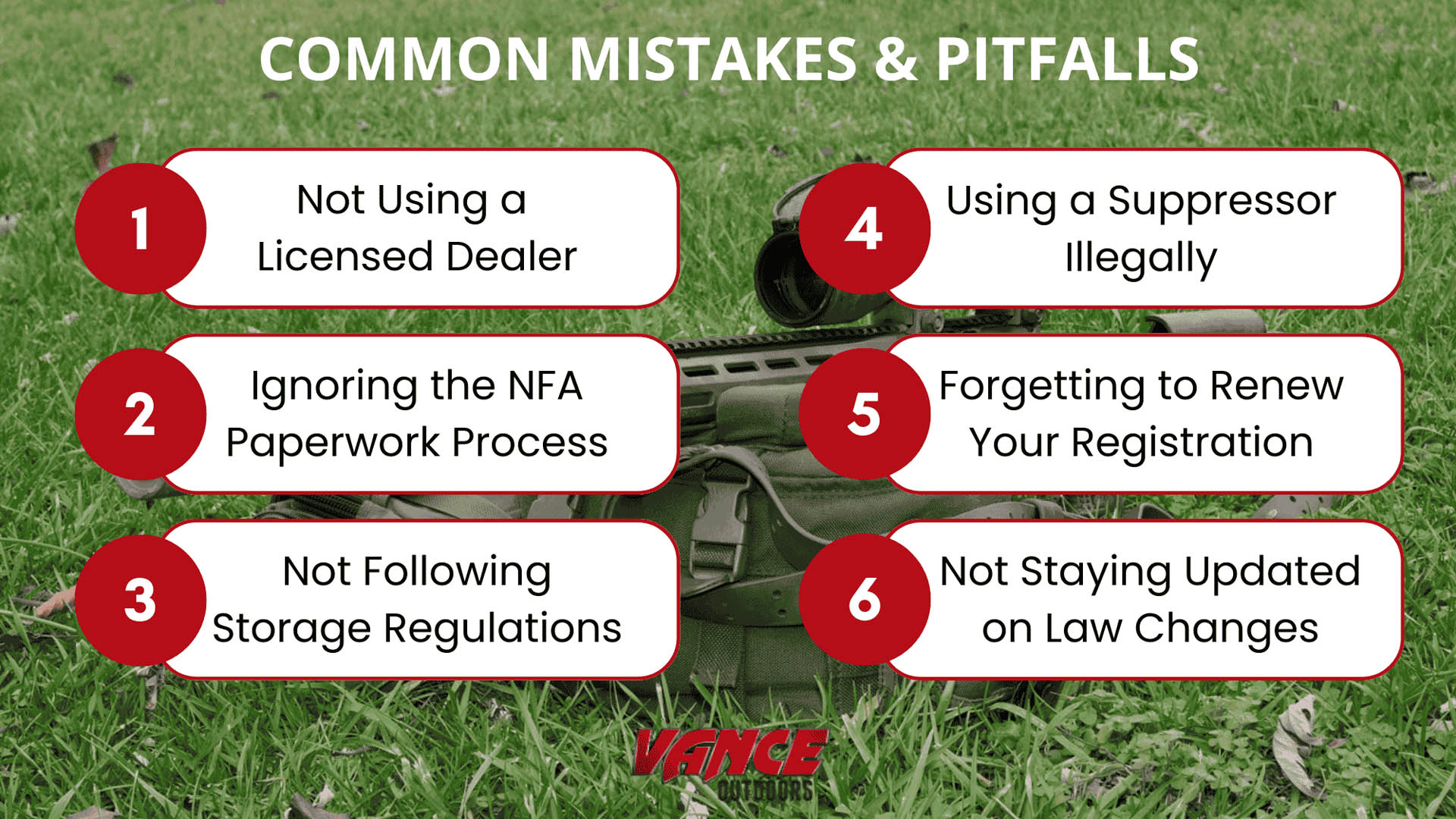
When purchasing and owning a suppressor in Ohio, there are several common mistakes that can lead to legal issues or delays in the approval process.
- Failing to Use a Licensed Dealer
One of the most common mistakes is purchasing a suppressor through an unlicensed dealer or individual. Suppressors are regulated by the National Firearms Act (NFA), meaning they must be purchased through a licensed firearm dealer who has the proper credentials to handle NFA items. Avoid using private sales or unlicensed dealers to ensure the transaction is legal.
- Ignoring the NFA Paperwork Process
Another mistake is not properly completing or submitting the necessary paperwork, such as the ATF Form 4. Any errors or omissions on the form can result in delays or denial of your suppressor application. Be thorough and double-check your information before submitting it to avoid setbacks.
- Not Following Storage Regulations
Suppressors, like other firearms, must be stored securely to prevent unauthorized access. Failing to store your suppressor in a safe or lock box can result in theft or improper use. Ensure you follow all safety and storage laws to keep your suppressor secure.
- Using a Suppressor Illegally
One of the most serious legal mistakes is using a suppressor for illegal activities. Suppressors are legal in Ohio when used for lawful purposes like hunting or target shooting, but they cannot be used in the commission of a crime. Using a suppressor in the commission of a crime can lead to severe criminal penalties.
- Forgetting to Renew or Update Your Registration
After purchasing a suppressor, it's important to stay on top of any changes in your registration status. If you move, you may need to update your information with the ATF. Failure to do so could cause issues with your suppressor's legal status.
- Not Staying Updated on State Law Changes
Although Ohio generally follows federal regulations, state laws can change. It's important to stay informed about any revisions to the Ohio Revised Code or state regulations regarding suppressors. Regularly checking with legal experts or reliable firearm dealers can ensure you remain compliant with any updates.
Changes to the Suppressor Tax Stamp in 2026
Recent federal legislation signed in 2025 eliminates the traditional $200 tax stamp for suppressors and certain other National Firearms Act (NFA) items, beginning January 1, 2026. Under the update, firearm owners will no longer pay the $200 federal excise tax when submitting an ATF Form 4 for a suppressor or similar item.
Suppressors will still be regulated as NFA items, meaning you must complete the full paperwork process, including ATF Form 4, fingerprint cards, passport-style photos, and a background check, before taking possession. The only change is the elimination of the tax itself, which lowers the financial barrier to ownership but does not alter the core registration requirements.
This change can make suppressor ownership more accessible to shooters and hunters across the United States while maintaining ATF oversight and safety requirements.
Suppressor Ownership in Ohio
Understanding Ohio's suppressor laws and how they align with federal regulations is crucial for every gun owner who wants to remain compliant. Whether you're looking to reduce noise at the range, improve accuracy while hunting, or protect your hearing, purchasing and using a suppressor comes with specific legal requirements that must be followed.
By choosing a licensed dealer, completing the proper paperwork, and understanding both state and federal laws, you can enjoy your suppressor legally and responsibly. Be mindful of common mistakes, like failing to use a licensed dealer or improperly storing your suppressor, to ensure you stay within the bounds of the law.
At Vance Outdoors, we offer a wide selection of firearms and their accessories. Whether you're a seasoned shooter or new to suppressor ownership, we can guide you through the legal process and help you find the perfect suppressor for your needs. Browse our selection today and take the first step toward safe, legal suppressor ownership.